Vatnajökull travel ban
Operation NapoleonThe Vatnajökull travel ban is a public restriction announced in response to a supposed volcanic-eruption alert, but the alert is fabricated to obscure a U.S. military operation on the glacier. Its significance lies in the gap between the stated emergency and the secret purpose it serves: the ban presents military secrecy as public protection, even as the Icelandic Government disputes the American operation and its authority over Icelandic territory.
Announcement and Stated Justification
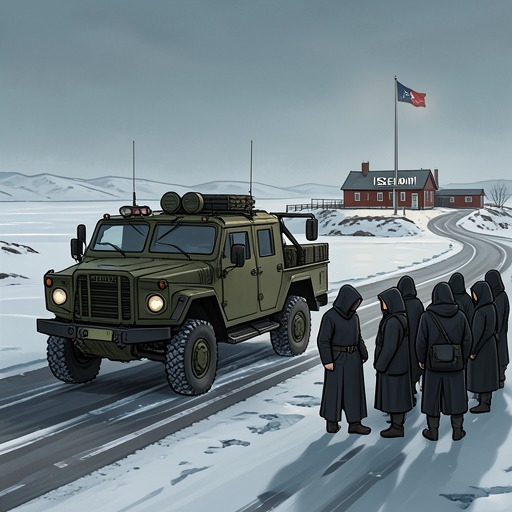
The ban is announced for the Vatnajökull area after Kristín is told that newsflashes on every channel have cited an eruption alert and declared a state of emergency. The stated danger supplies an immediate reason to keep people away from the glacier, but Kristín rejects the explanation and accuses the Icelandic Government of yielding once again to American pressure. Her response makes the announcement politically suspect before its falsity is confirmed.
The later account establishes that the volcanic alert was fabricated. Reykjavík air traffic control has tracked Pave Hawk helicopter movements, and Carr recognizes that this information may lead people to connect the aircraft with the earlier broadcast and draw their own conclusions. The ban and alert therefore do not simply communicate a hazard: they form part of a cover story whose credibility is threatened by observable military activity.
The Operation Behind the Restriction
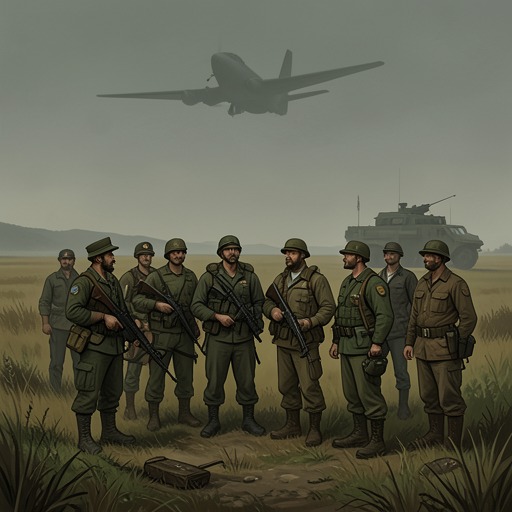
The travel ban occurs amid an American effort to excavate a German aircraft from Vatnajökull and move it to the base. U.S. officials tell Icelandic ministers that the aircraft has appeared in military satellite imagery and that the recovery will require substantial movements of personnel and equipment through Iceland. They seek the Icelandic Government’s permission, but the American general also insists that the plane is not Iceland’s concern and urges that the matter be resolved without outside involvement and then forgotten.
That clash over permission shapes the meaning of the ban. The Icelandic prime minister later says the government has no authority over the rescue team already on the glacier and that, with adequate warning, the area could have been closed to traffic. The Americans have not provided that warning. When the prime minister demands a public investigation and announces that roads between the glacier and the base will be closed until there is full disclosure, his proposed restriction is an open response to the military operation; the later travel ban, by contrast, is publicly justified through the false eruption alert.
Emergency Claims and Public Safety
The general also invokes a German bomb on the glacier, saying that Icelandic rescuers are in danger and should be called back to prevent a catastrophe. This claim gives the secret operation another emergency rationale, but it is not the explanation offered to the public for the travel ban. In a separate exchange, Ratoff tells a pilot that the German aircraft is safe and that no bomb has been found. The conflicting accounts show how danger is asserted or denied according to the audience and the immediate needs of the operation.
The restriction consequently sits within a shifting sequence of security claims: an eruption alert for the public, a bomb warning to Icelandic officials, and reassurances to military personnel that the aircraft is harmless. The evidence does not establish the ban’s precise enforcement arrangements, but it does show that the public-facing alert is false and that the military’s secret activity is the matter being concealed.
Political Consequences and Significance
The deception intensifies a dispute rooted in the longstanding friction over the American military presence in Iceland. The 1949 defence treaty provoked a riot outside the Icelandic parliament, and opposition to the base persisted despite the Icelandic policy that the nation should not profit from NATO’s presence. Economic dependence complicates that opposition: contractors and service companies have received substantial sums, while nearby communities have relied on the Iceland Defense Force.
Against this history, the fabricated alert attempts to manage public access and public knowledge at once. It cannot fully contain the story: Reykjavík air traffic control has tracked the helicopters, and Carr anticipates that people will connect those movements to the broadcast. The travel ban thus becomes an unstable instrument of secrecy. Rather than resolving the conflict over who may authorize military action on Icelandic soil, it exposes how emergency language can be used to disguise that conflict—and how easily the cover can unravel when events remain visible.